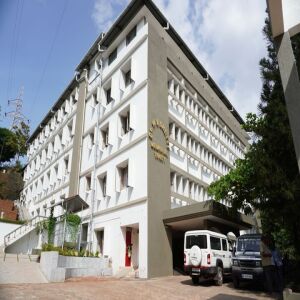
Dr. M.V. Shetty Institute of Allied Health Sciences, a trailblazing institution committed to excellence in allied health education since its establishment in 1996, offers the Bachelor of Science (B.Sc) program in Medical Imaging Technology (MIT). This innovati...
Dr. M.V. Shetty Institute of Allied Health Sciences, a trailblazing institution committed to excellence in allied health education since its establishment in 1996, offers the Bachelor of Science (B.Sc) program in Medical Imaging Technology (MIT). This innovative program is crafted to equip students with a thorough understanding of medical imaging techniques and technologies. Affiliated with the esteemed Rajiv Gandhi University of Health Sciences in Bangalore, Karnataka, our institute maintains its commitment to excellence in allied health education.
Dr. M.V. Shetty Institute of Allied Health Sciences, a trailblazing institution dedicated to excellence in allied health education since its establishment in 1996, proudly offers a Bachelor of Science (B.Sc) program in Medical Imaging Technology (MIT). As we strive to become a globally recognized center of excellence and expertise, our comprehensive degree programs include both B.Sc and M.Sc in Medical Laboratory Technology.
Affiliated with the esteemed Rajiv Gandhi University of Health Sciences in Bangalore, Karnataka, our institution upholds the highest standards in healthcare education. Our B.Sc MIT program aligns with this commitment, empowering students with the skills and knowledge essential for success in the dynamic field of clinical laboratory testing.
Following Original Certificates should be submitted at the time of Admission with one set of attested copy:
| Sl.No | Semester/Year | Course/Subject Title |
|---|---|---|
| 1 | I Year B.Sc MIT ( Annual Scheme ) | Human Anatomy |
| Physiology | ||
| Biochemistry | ||
| Pathology I (Clinical Pathology, Haemotology & Blood Banking) | ||
| Microbiology | ||
| 2 | II Year B.Sc MIT ( Annual Scheme ) | Radiation Physics: Medical Physics & Radiation Safety in Radio Diagnosis |
| Imaging Physics & Dark Room Techniques | ||
| Radiographic Positioning and Techniques | ||
| 3 | III Year B.Sc MIT ( Annual Scheme ) | Diagnostic Imaging Techniques & Modalities |
| Radiographic Special Procedures and Patient Care |
A candidate seeking admission to the BSc. Medical Imaging Technology shall have studied English as one of the principal subjects during the tenure of the course and shall have passed:
OR
OR
The pedagogical approach for the B.Sc Medical Laboratory Technology (BMLT) program at Dr. M.V. Shetty Institute of Allied Health Sciences is meticulously designed to provide students with a well-rounded education and hands-on experience. Our curriculum strikes a harmonious balance between theory and practical application to ensure students develop a strong foundation in laboratory sciences.
Key elements of our pedagogy for BMLT include:
Comprehensive Theoretical Training: Students receive in-depth theoretical knowledge through a wide range of courses, covering subjects such as biochemistry, microbiology, pathology, and laboratory management. This equips them with a deep understanding of the principles that underpin medical laboratory technology.
State-of-the-Art Laboratory Facilities: We provide access to cutting-edge laboratory facilities equipped with the latest diagnostic instruments and technologies. Students have the opportunity to apply their theoretical knowledge in a real-world laboratory setting, enhancing their practical skills.
Hands-On Practical Experience: Practical training is a cornerstone of our program. Students actively engage in laboratory work, including sample collection, testing, and analysis. This hands-on experience is vital for honing their technical skills and preparing them for the demands of the profession.
Clinical Internship: To bridge the gap between education and professional practice, students undergo a clinical internship in reputed healthcare institutions. This immersive experience allows them to work alongside experienced professionals, gaining exposure to real healthcare scenarios.
Interdisciplinary Learning: We encourage interdisciplinary learning, enabling students to collaborate with peers from diverse healthcare disciplines. This fosters a holistic understanding of patient care and the role of medical laboratory technology within the broader healthcare context.
Continuous Assessment: Continuous assessment and evaluations are conducted to monitor students’ progress. This approach ensures that students receive timely feedback and support for their academic and practical growth.
Research Opportunities: We promote research and innovation in the field of medical laboratory technology. Students have the chance to engage in research projects, encouraging critical thinking and problem-solving skills.
Our pedagogical approach for BMLT aims to produce graduates who are not only proficient in laboratory techniques but also possess the analytical mindset and adaptability needed to excel in the dynamic field of medical laboratory technology.
Radiologic Technologist: Conduct diagnostic imaging procedures using X-rays, CT scans, and MRIs in hospitals, clinics, or imaging centers.
MRI Technologist: Specialize in magnetic resonance imaging (MRI) for detailed internal body structure images.
CT Technologist: Operate computed tomography (CT) scanners to produce cross-sectional images for medical diagnosis.
Ultrasound Technologist: Create images of organs, tissues, and blood flow using ultrasound technology for diagnostic purposes.
Nuclear Medicine Technologist: Administer radioactive materials for imaging and therapeutic purposes, specializing in nuclear medicine procedures.
Cardiovascular Technologist: Focus on imaging and monitoring the heart and blood vessels, including echocardiography and vascular imaging.
Mammography Technologist: Specialize in breast imaging to aid in the detection and diagnosis of breast diseases.
Radiation Therapy Technologist: Administer radiation treatments to cancer patients under the guidance of a radiation oncologist.
PACS Administrator: Manage and maintain medical imaging data using Picture Archiving and Communication Systems (PACS).
Healthcare Informatics Specialist: Utilize technology to manage and analyze medical imaging data, contributing to healthcare information systems.
Research Associate in Medical Imaging: Contribute to medical imaging research projects, working with academic institutions or research organizations.