

Dr. M.V.Shetty College of Speech and Hearing established in the year 1991, which is the first private sector speech and hearing college in India with an exclusive building and full-fledged facilities. The college offers Masters of Sciencie- Speech Language Pa...
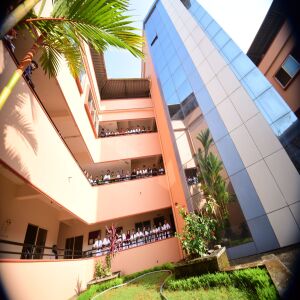
Dr. M.V.Shetty College of Speech and Hearing established in the year 1991, which is the first private sector speech and hearing college in India with an exclusive building and full-fledged facilities.
The college offers Masters of Sciencie- Speech Language Pathology(M.Sc. (SLP)), which is affiliated to Mangalore University and and recognized by the Rehabilitation Council of India, New Delhi.
A two-year postgraduate programme, Master of Science (Speech Language Pathology) focuses on imparting advanced knowledge about the assessment and management of speech, language and swallowing disorders. In accordance with the recommendations of the RCI, New Delhi, the programme is designed to provide theoretical, clinical and research skills to create professional experts in the field.
Following Original Certificates should be submitted at the time of Admission with one set of attested copy.
Candidates with BASLP/B.Sc. (Speech & Hearing) degree of any recognized university by the Rehabilitation Council of India or any other degree considered as equivalent thereto and having an average of not less than 55% of marks are eligible for admission to M.Sc.(SLP). ‘Average’ refers to average of the aggregate marks obtained in all the years/semesters of the qualifying examination.
M.Sc.(SLP) programme includes “core” and “elective” courses. The “Core course” will further consist of “hard” and “soft” core courses. Hard core courses can have 3-5 credits. Soft core courses can have 3-4 credits. Practical (Hard core or Soft core) can have 2-5 credits. Open Electives have 3 credits each. Dissertation will carry 6 credit points with the total credit of 92 including open electives.
|
1st SEMESTER |
|
|
Course Code |
Course Title |
|
Hard Core |
|
|
SH-SLP101 |
Speech Science and Speech Production |
|
SH-SLP102 |
Neurobiology of Speech Language and Cognition |
|
SH-SLP103 |
Clinical Practicum |
|
Soft Core |
|
|
SH-SLP104
SH-SLP105 |
Research Methods, Epidemiology and statistics Or Contemporary Issues in Clinical Linguistics |
|
SH-SLP106
SH-SLP107 |
Augmentative and Alternative Communication Or Advances in Research Methods and Statistics in Speech Language Pathology |
|
SH-SLP108
SH-SLP109 |
Clinical Linguistics and Multilingual issues Or Advances in Augmentative and Alternative Communication |
|
2nd SEMESTER |
|
|
Hard Core |
|
|
SH-SLP 201 |
Disorders of Fluency |
|
SH-SLP 202 |
Voice: Science and Disorders |
|
SH-SLP 203 |
Clinical Practicum |
|
Soft Core |
|
|
SH-SLP 204
SH-SLP205 |
Language Disorders in Children Or Contemporary Issues in Speech Sound Disorders |
|
SH-SLP206
SH-SLP207 |
Advances in Speech Sound Disorders Or Advances in Childhood Language Disorders |
|
OE |
Open Elective As prescribed from the University of Mangalore |
|
3rd SEMESTER |
|
|
Hard Core |
|
|
SH-SLP301 |
Neurogenic Speech Disorders |
|
SH-SLP302 |
Aphasia |
|
SH-SLP303 |
Clinical Practicum |
|
Soft Core |
|
|
SH-SLP 304
SH-SLP 305 |
Cognitive communicative Disorders Or Language Disorders related to reading |
|
SH-SLP 306 Or SH-SLP 307 |
Language and Literacy Disorders Or Contemporary Issues in Cognitive communicative Disorders |
|
Open Elective |
As prescribed from the University of Mangalore |
|
4th SEMESTER |
|
|
Hard Core |
|
|
SH-SLP401 |
Practices in Speech Language Pathology |
|
SH-SLP402 |
Dysphagia |
|
SH-SLP403 |
Dissertation in Speech or Language Pathology |
|
SH-SLP 404 |
Clinical Practicum |
The pedagogy for the Masters of Audiology and Speech-Language Pathology (MASLP) program at Dr. M.V. Shetty College of Speech and Hearing is designed to provide students with a comprehensive and well-rounded education. Here’s an overview of the pedagogical approach:
Holistic Learning: Our curriculum emphasizes a holistic approach to audiology and speech-language pathology. Students engage in a balanced mix of classroom lectures, practical hands-on sessions, clinical internships, and research projects. This approach ensures that students gain both theoretical knowledge and practical skills.
Interdisciplinary Training: MASLP students benefit from interdisciplinary training, collaborating with professionals from related fields such as medicine, psychology, and education. This exposure enhances their ability to work effectively in diverse healthcare settings and with patients of all ages.
Clinical Exposure: Practical training is a cornerstone of our pedagogy. Students have access to state-of-the-art audiology and speech-language pathology clinics where they work with real patients under the guidance of experienced faculty. This hands-on experience helps them develop clinical competence and confidence.
Research Emphasis: Research is a vital component of our pedagogical approach. MASLP students are encouraged to engage in research projects, case studies, and clinical audits. This not only advances the field but also prepares students for academic and research roles.
Interactive Learning: We promote interactive learning through discussions, case presentations, and workshops. This fosters critical thinking, problem-solving skills, and effective communication—essential qualities for audiology and speech-language pathology professionals.
Guest Lectures and Workshops: Regular guest lectures by experts in the field and workshops on specialized topics enrich the learning experience. These sessions expose students to the latest advancements and best practices.
Practical Skills Development: The program places a strong emphasis on developing practical skills in audiological assessments, therapy techniques, and the use of advanced technology and equipment. This ensures that graduates are well-prepared for the demands of clinical practice.
Ethical and Cultural Sensitivity: We instill ethical values and cultural sensitivity in our students. They learn to provide patient-centered care, respecting diversity and individual needs.
Our pedagogical approach aims to produce competent, compassionate, and research-oriented professionals who can excel in clinical practice, academia, and research. If you need further details or have specific questions, please let us know.